In a population of working couples,the man's weekly income X and the woman's weekly income Y are statistically independent and normally distributed.X has a mean of 250 and variance of 50,while Y has a mean of 200 and a variance of 60.What is the probability husband's income exceed his wife's income,on average?
what I tried to do was take
H0:u1−u2<=0
H1:u1−u2 >0
where u1:population mean income of men and u2:population mean income of women and under H0 compute,
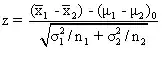 And after that get get the p-value because p-value is the minimum value of significance level that would reject Ho.When H0 is rejected I get the value where man's income exceeds womens income.But how to get n1 and n2 values?And I don't know if I am going in the correct way.Any help to get this done please.

