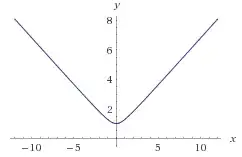
Let $y=mx+b$ be the oblique asymptote as $x\rightarrow\infty$.
Then $\displaystyle\lim_{x\to\infty}\left(\frac{x}{\arctan x}-mx-b\right)=0$, $\;\;$so $\displaystyle\lim_{x\to\infty}\left(\frac{x}{\arctan x}-mx\right)=b$ where
$\displaystyle\lim_{x\to\infty}\left(\frac{x}{\arctan x}-mx\right)=\lim_{x\to\infty}\left(\frac{1}{\arctan x}-m\right)x$ $\;\;$does not exist if $m\ne\frac{2}{\pi}$, since
$\displaystyle\lim_{x\to\infty}\left(\frac{1}{\arctan x}-m\right)=\frac{2}{\pi}-m$.$\;\;\;$
Therefore $\displaystyle m=\frac{2}{\pi}$, and $\displaystyle\lim_{x\to\infty}\left(\frac{x}{\arctan x}-\frac{2}{\pi}x\right)=$
$\displaystyle\lim_{x\to\infty}\frac{x\left(1-\frac{2}{\pi}\arctan x\right)}{\arctan x}=\lim_{x\to\infty}\frac{2}{\pi}\cdot{x\left(1-\frac{2}{\pi}\arctan x\right)}=\frac{2}{\pi}\lim_{x\to\infty}\frac{1-\frac{2}{\pi}\arctan x}{\frac{1}{x}}$
$=\displaystyle\frac{2}{\pi}\lim_{x\to\infty}\frac{-\frac{2}{\pi}\cdot\frac{1}{1+x^2}}{-\frac{1}{x^2}}=\frac{4}{\pi^{2}}\lim_{x\to\infty}\frac{x^2}{1+x^2}=\frac{4}{\pi^2},$ $\;\;$so $\displaystyle b=\frac{4}{\pi^2}$.
Thus $\displaystyle y=\frac{2}{\pi}x+\frac{4}{\pi^2}$ is one oblique asymptote, and the other is $\displaystyle y=-\frac{2}{\pi}x+\frac{4}{\pi^2}$
since the function is even.